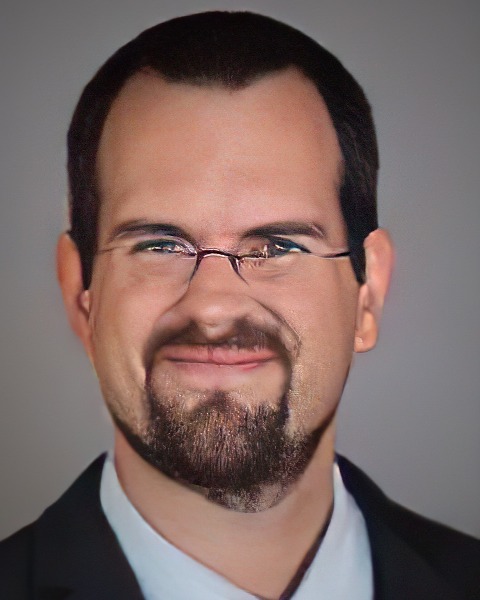
Chris Onderdonk, MSW, LCSW, AHPSW-C: No financial relationships to disclose
Key Message: As palliative care shifts away from fix-it approaches, clinicians are being asked to offer presence in the face of suffering that cannot be resolved. This session explores how presence itself—when grounded in relational, trauma-informed, and neuroscience-based principles—can be an active intervention that supports regulation, connection, and moments of healing.
Abstract: Background / Purpose Across palliative care, there is a growing emphasis on resisting the urge to fix and instead “just be present” with patients in pain (1). While this shift reflects a needed humility, it can leave clinicians with limited frameworks for what presence actually does—or how it might meaningfully support healing even when suffering remains. Rather than viewing presence as neutral, this session proposes that presence—when grounded in trauma-informed care, neuroscience, and relational models—is a powerful clinical and ethical stance.
Approach This session reframes presence as a co-regulating, relational, and healing act. Drawing on trauma-informed care (2), Polyvagal Theory (3), compassion science, and models such as Accelerated Experiential Dynamic Psychotherapy (AEDP) (4), and Internal Family Systems (IFS) (5),the session will explore how presence can downregulate distress, invite integration, and honor the dynamic nature of suffering and healing. Rather than reinforcing binaries such as “relieved vs. unrelieved suffering” or “presence with agenda vs. presence without impact,” The session will offer a third path: presence as an embodied stance that invites regulation and meaning-making through attuned relationship. A healing-informed framework will be introduced, which expands on trauma-informed care by recognizing that even in the presence of pain, moments of connection, dignity, and transformation are possible. Through clinical reflection, theory, and facilitated dialogue, participants will be invited to reimagine presence as both a clinical skill and a political act—one that acknowledges history, honors difference, and supports real-time healing.
Implications / Lessons Learned Presence is not passive. When grounded in relational attunement, identity awareness, and co-regulation, it becomes a deeply impactful form of clinical care—particularly in contexts of trauma, existential distress, and structural harm. This session offers a healing-informed lens to guide clinicians in supporting transformation even when suffering cannot be fixed.
References: 1. Rattner, M., & Berzoff, J. (2016). Rethinking suffering: allowing for suffering that is intrinsic at end of life. Journal of Social Work in End-of-Life & Palliative Care, 12(3), 240-258.
2. Brown, S. M., Nathanson, D., & Teague, G. (2023). Trauma-Informed Care: A Framework for Organizational Change. Social Work in Health Care, 62(1), 1–16.
3. Porges, S. W. (2011). The polyvagal theory: Neurophysiological foundations of emotions, attachment, communication, and self-regulation. W. W. Norton & Company.
4. Iwakabe, S., Edlin, J., Fosha, et al. (2020). The effectiveness of accelerated experiential dynamic psychotherapy (AEDP) in private practice settings: A transdiagnostic study conducted within the context of a practice-research network. Psychotherapy, 57(4), 548.
5. Schwartz, R. C. (2021). No bad parts: Healing trauma and restoring wholeness with the Internal Family Systems model. Sounds True.
Learning Objectives:
Apply trauma- and neuroscience-informed strategies to offer attuned, co-regulating presence when suffering cannot be resolved.
Demonstrate how to shift from a passive to a relational model of presence that honors trauma, identity, and the dynamic nature of suffering and healing.